
Your first pottery tools should be a small, basic set of hand tools that covers shaping, trimming, and smoothing, plus a bit of water and a sponge. You don't need a studio full of gear to start. Most beginners do fine with a handful of simple pieces and a clear idea of what they plan to make.
Before you buy anything, think about what kind of work you want to do. Hand building with coils or slabs needs different tools than throwing on a wheel. If you're unsure, a mixed set with a range of shapes gives you room to try both without committing.
Check the product title and the list of included pieces carefully. Some sets are heavy on carving tools and light on trimming tools, and some add texture rollers or stamps you may never use. Look for pieces that match the work you plan to do this month, not the work you might do in a year.
Pay attention to what the tools are made of. Metal tools hold a sharp edge and can cut clay cleanly, but a sharp blade can also cut you, so keep them away from your fingers when you work and store them where kids and pets can't reach them. Wooden tools are gentler on the hands but can swell or splinter if they stay wet for long stretches, so dry them after each session.
Keep your budget realistic and expect to add pieces later. Buy a starter kit first, use it for a few weeks, and then note what you reach for most. That tells you far more than any checklist can. Always read the maker's instructions for cleaning and care, since those details can vary from one product to another.
Must-Have Hand Tools for Starters
A basic loop tool is one of the first hand tools you'll reach for. It's a thin metal or wire loop on a handle, and it scoops away clay for hollowing out a bowl or smoothing a rim. Look for one with a loop shape you can grip comfortably, since you'll hold it for long stretches while you work.
A wire or metal needle tool is handy for scoring lines, poking holes, and marking where two pieces of clay should join. Some kits include one with a fine point on one end and a slightly thicker tip on the other, which covers both detailed lines and bigger marks.
A flat paddle or wooden shaping tool helps you smooth walls, compress seams, and even out thick spots. Wood is easy on the hands and works well for pressing clay gently, though it should be kept dry between sessions to avoid warping.
Each of these tools does a different job, so you don't need to buy them all at once. A good starting kit should include at least a loop, a needle, and a smoothing shape. If a set you're looking at has these three, you're covered for most early projects.
For a single product that covers this range, the Zuoyou 6 Pcs Clay Pottery Sculpting Tools Set is listed as a six-piece sculpting set, so check its title and included pieces to confirm it has the loop, needle, and smoothing shapes you want.

Zuoyou 6 Pcs Clay Pottery Sculpting Tools Set
A six-piece aluminum alloy set for shaping, detailing and trimming clay, with ribbon loops and scrapers in one kit.
Product information
Our review: 3.8 out of 5
Product links
Clay Cutters, Ribs, and Sponges Explained
Clay cutters, ribs, and sponges are the tools that handle the cutting, shaping, and finishing side of things. A wire cutter lets you slice a block of clay cleanly without tearing it, and it's a good first purchase if you buy clay in blocks. The wire loop sits between two handles, and you pull it through the clay in one smooth stroke. Pull it slowly so the clay doesn't drag or crumble. Keep the wire taut and check it now and then, because a loose or kinked wire makes uneven cuts.
Ribs are flat tools that press and smooth the outside and inside of a wet piece. They come in several shapes, and the one you reach for depends on the surface you're working. Rubber ribs give a soft, even finish. Wooden or metal ribs can push clay harder and sharpen the edges of a pot. Some ribs have a bevel on one side, so check which edge is the working one before you start. Keep them clean of dried clay, since bits of hardened clay can scratch the next piece you smooth.
Sponges are the cheapest tool on the bench, but they matter more than most people expect. A natural or synthetic sponge soaks up extra water and softens a rough surface. Wring it out well before you touch the clay. A sponge that drips makes the piece too wet and can cause slumping. Keep one sponge for smoothing and another for cleanup if you can, so the rinsing water doesn't leave residue on your work.
If you want a rib option, the Sherr 12 Pcs Pottery Ribs Rubber Clay Tool Set gives you a set of rubber ribs in its title, which covers the soft finishing work. For a trimming-focused kit that includes a rib style, the DIYOOHOMY 3 Piece Wooden Pottery Rib Trimming Tool Set is listed as a three-piece wooden rib and trimming set, so check its title for the exact pieces before you buy.
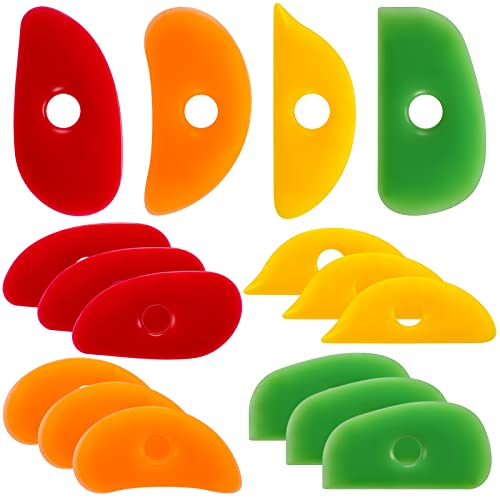
Sherr 12 Pcs Pottery Ribs Rubber Clay Tool Set
A 12 piece set of rubber ribs in four shapes and four colors for shaping, smoothing and trimming clay.
Product information
Our review: 4.2 out of 5
Product links
Keep your hands clear of the wire on a cutter and never pull it toward your body with force. Wet clay mixed with dust from dry clay can irritate your lungs, so wipe up slurry with a damp sponge instead of sweeping dry dust, and check the maker's instructions for any dust precautions that apply to the clay you buy.
Pros
- Pottery tool sets are usually cheap compared with buying tools one at a time, so a beginner can try a few shapes without spending much.
- Wooden and metal ribs and trimming tools give you smooth, clean edges on a piece that is still soft, which is a big help when you are learning to shape clay.
- A basic kit with a few different tips and loops lets you carve, cut, and smooth without needing a separate tool for every single job.
- Trimming tools and spinners let you clean up the bottom of a thrown piece once it has firmed up, so the finished pot looks neater.
- Many kits come with a few spare shapes, so you can keep experimenting with texture and detail as your skills grow.
Cons
- Cheap multi-piece sets often include tools you will never use, so you may pay for a lot of extras that sit in the drawer.
- Plastic and rubber tools can warp or wear down over time, especially if you leave them in hot spots or use them on very hard clay.
- Wooden handles need to stay dry, and they can crack or get fuzzy if they get soaked during cleanup.
- Trimming tools and ribs work best with the right clay stiffness, so a beginner may find them frustrating at first until they learn timing.
- Small sets with fine tips can be easy to lose on a messy studio table, and some tiny pieces are simple to misplace.
Your Final Shopping Checklist
Before you hit checkout, it helps to run through a short list so you don't end up with a drawer full of gadgets you never touch. Start by writing down the three things you plan to make in the next month. A bowl, a set of mugs, and a small tile might need completely different tools, so the list keeps you honest.
Next, check the tool count against that list. Look for a loop, a needle, a smoothing shape, a rib, and a sponge or two. If a kit covers those, you're in good shape. Skip sets that are mostly texture stamps or carving blades unless you already know you want those.
Then look at the handles and tips. Chunky handles are easier to grip for longer sessions, and fine tips are harder to find if you lose them. Think about where you'll store everything, too. A small tray or a jar on the bench keeps the sharp pieces off the floor and away from anyone who wanders into the studio.
Finally, buy with a plan to come back. Once you've used your starter kit for a few weeks, you'll know which shape you grabbed without thinking. That's the one to replace or add to next time. Keep your receipt and the maker's care notes with your tools so you can look up cleaning steps when you need them.

